
Recipes
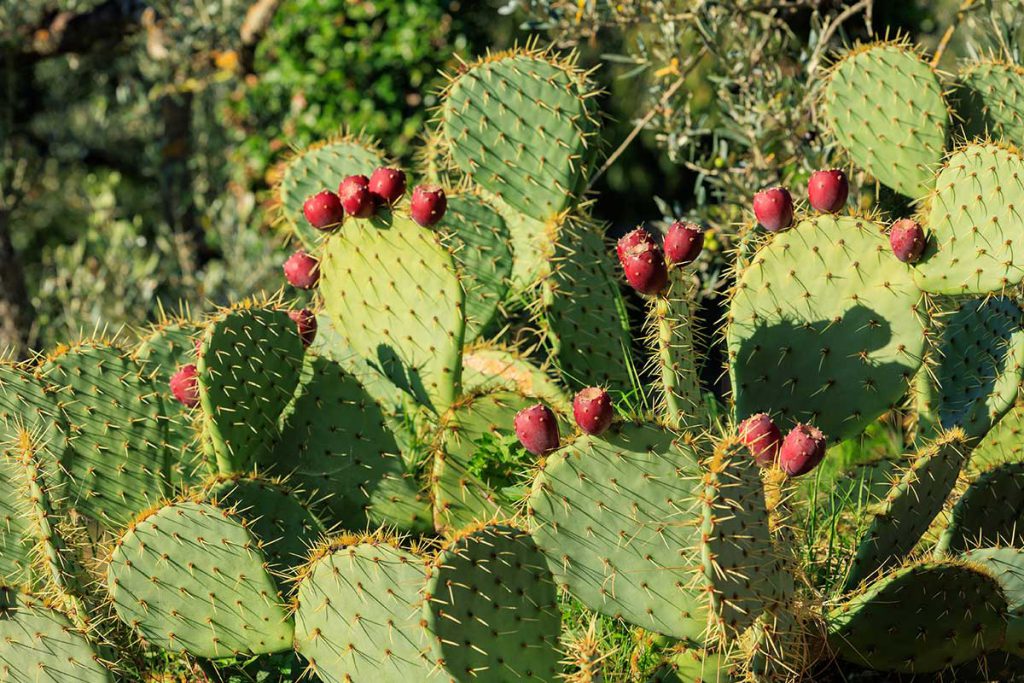
Sautéed Nopales Over Tepary Beans and Prickly Pear Syrup Drizzle
A classic southwestern dish, nopales, or prickly pear cactus paddles, are widely available throughout the West and offer a cornucopia of both flavor and nourishment.
In the spring, prickly pear cactus also produces fruiting bodies that have been used as a food source for millennia in indigenous cultures, from jams and syrups to raw fruit. These can be sautéed or boiled, but the most common preparation is to sauté them with tomato, garlic, and onion in a bit of oil.
Nopales are extremely rich in fiber and calcium and may foam when cooked alone, which is completely normal, but worth mentioning. Tepary beans are a traditional food of several tribes of the Southwest, but are most closely associated with the Tohono O’odham people, who have grown them as a staple crop for hundreds of years.
They come in a variety of colors, with black being the most widely available.
It is not essential to use tepary beans if they aren’t available, but if they are, they can’t be beat! Not only are they delicious, but they are also packed full of micronutrients that help slow digestion and sugar absorption in the gut, so they can help your body absorb more nutrients and control sugar spikes, also aiding in diabetes prevention. Something our American culture needs to be exceedingly conscious of, no matter your family heritage.
This dish creates a real sense of the abundance of the Southwest, a place that many Americans view as stark, arid and devoid of life, which couldn’t be further from the truth.
No matter how this dish is prepared, on a campfire in the outback or in a fine-dining setting, you will never go wrong with nopales and beans.
Ingredients
- 1 cup of tepary beans (substitute dried black, pinto, or soldier beans, as available)
- 2 cups water
- 1 medium paddle of prickly pear cactus (cleaned and de-eyed, can be peeled if desired)
- 1 large organic tomato
- 1 medium organic red or white onion
- 2 cloves minced garlic
- 4 oz of organic olive or your favorite cooking oil
- Salt and pepper (to taste)
Optional: prickly pear syrup (substitute maple or any organic sweetener you like)
Instructions
- In a medium pot, bring two cups of water to a boil. Add one cup of tepary beans, return to a boil, then reduce to a low simmer. The lid can be removed for a firmer bean or left on for a much softer bean.
Keep in mind, cooking times will vary. For a firm bean, allow at least two hours; for a softer paste, allow at least three hours. I have soaked, twice boiled for two hours each session, and still had a distinct bean. These beans do not break down many other modern culinary beans will due to their heartiness and nutritional value. Use your discretion and experiment. You can cook these beans anytime, as they will save and can be added at the end of the nopales cooking to reheat.
- While the beans are cooking, go ahead and dice the onion and tomato, and crush and mince the garlic. I like to cut the nopales into long strips, leaving the outer layer of the cactus intact. However, some may prefer to peel the skin of the cactus as it can be a bit bitter. But this is where a lot of the nutrients are found.
Keep in mind that proper preparation of the cactus is a must, as they not only have long spikes but also small hairs that are nearly invisible to the naked eye. These are actually much more bothersome if missed during prep and can irritate the lips, fingers, mouth, or throat if ingested. Always wear thick rawhide gloves when handling the cactus in the wild and all the way through prep. My rule is to always scrape twice. Once in the field before they enter the basket, and once in the kitchen before they are prepared. This usually ensures you’ve cleared any uninvited guests from your meal. - Bring a large skillet or saucepan (I love cooking with cast iron) to medium heat, add 2 oz of your cooking oil, then add the onion, garlic and glace for about 8-10 minutes.
- Once the mixture is translucent, add the tomato and fresh nopales and sauté for another 10 minutes, ensuring the nopales are fork tender. You can use the extra oil sparingly throughout if things begin to stick from all the fiber. Use discerning amounts of salt and pepper, to taste, to bring out the richness and complexity of flavor.
- Create a bed of cooked tepary beans and scoop on a healthy portion of the sautéed nopales mixture. Add a drizzle of your favorite syrup or jam for sweetness. Hot sauce is also a favorite for southwest flair and even preferred in the heat of the summer months.
Kick your boots off and enjoy that Sonoran sunset!